Timber Brands wooden bricks are redefining how families, schools, and businesses think about construction toys by offering a sustainable alternative to traditional plastic building systems. While plastic bricks have dominated the market for decades, growing awareness around environmental impact, safety, and long-term usability has shifted attention toward FSC-certified wooden options. As biodegradable building blocks made from responsibly sourced wood and bamboo, Timber Bricks provide a modern solution that balances creativity with sustainability.
Every Timber Brick is part of a plastic-free play system crafted in the USA through precision CNC milling and laser engraving. By combining durability, customization, and eco-conscious materials, Timber Brands delivers building bricks that not only perform like traditional systems but also align with the values of today’s families and organizations.
Understanding the Difference Between Wood and Plastic Bricks
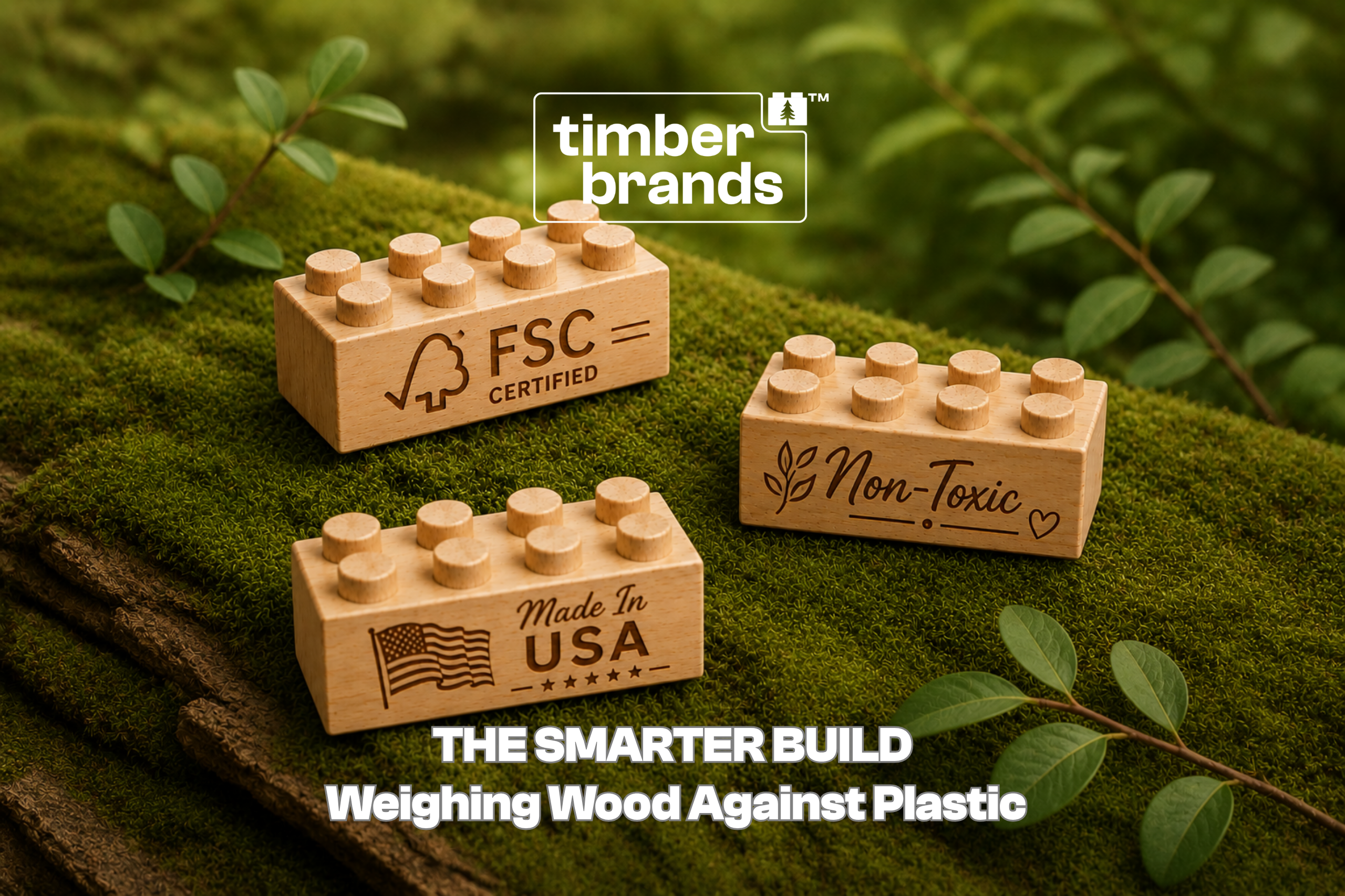
Wooden and plastic building bricks serve the same fundamental purpose, but they differ significantly in materials, manufacturing, and environmental impact. Plastic bricks are typically made from petroleum-based compounds, while Timber Brands bricks are produced from FSC-certified hardwood and renewable bamboo.
This distinction affects everything from how the bricks are made to how they are used and disposed of. Wooden bricks offer a natural, biodegradable lifecycle, while plastic bricks can persist in landfills or oceans for centuries. Understanding this difference is key when evaluating which option is better suited for long-term use.
The Environmental Impact of Each Material
One of the most important considerations when comparing wooden and plastic bricks is sustainability. Plastic production contributes to global carbon emissions and long-term waste, with many products never fully breaking down. In contrast, Timber Brands bricks are made from renewable materials that biodegrade safely over time.
Through zero-waste U.S. manufacturing, Timber Brands reduces environmental impact by recycling wood byproducts and eliminating petroleum-based inputs. Each product—from Wooden Bricks to Plus Size Bricks and Pre-Engraved Theme Sets—supports a system designed to minimize waste and promote responsible consumption.
Safety and Material Considerations
Safety is another critical factor, especially for children and classroom environments. Plastic bricks can contain synthetic compounds and are produced through chemical processes, while wooden bricks are naturally non-toxic and crafted with smooth finishes for safe handling.
Timber Brands bricks are designed for families, schools, and workspaces where safety matters. Parents often choose Plus Size Bricks for younger children, while educators rely on Wooden Bricks for hands-on learning. The use of FSC-certified wood ensures that each brick meets high standards for both safety and sustainability.
Play Experience and Sensory Benefits
The material of a building brick directly influences how it feels and functions during play. Wooden bricks provide a tactile experience that plastic cannot replicate, offering natural texture, weight, and warmth. This sensory engagement can enhance focus, creativity, and overall interaction.
Timber Brands bricks encourage open-ended play that adapts to the child’s imagination. Whether used in structured classroom settings or at home, the natural properties of wood create a more immersive and engaging experience compared to standard plastic alternatives.
Durability and Long-Term Use
Durability is often associated with plastic, but wooden bricks are designed to withstand years of use while maintaining their structural integrity. Timber Brands bricks are precision milled to ensure compatibility with leading brick systems, allowing them to integrate seamlessly into existing collections.
This compatibility extends their lifespan and usability, making them a long-term addition rather than a replacement. Over time, wooden bricks maintain their function while offering a more sustainable end-of-life cycle compared to plastic products.
Are There Any Drawbacks to Wooden Bricks?
While wooden bricks offer many advantages, it is important to consider potential limitations. Wood can show natural wear over time, and its texture differs from the uniform surface of plastic. However, these characteristics are often viewed as part of the product’s authenticity and appeal.
Timber Brands addresses these considerations through precision CNC milling and finishing processes that ensure consistency, smooth edges, and reliable performance. The result is a product that balances natural material qualities with modern manufacturing standards.
A Smarter Choice for Modern Play
The comparison between wooden and plastic building bricks ultimately comes down to priorities. For those focused on sustainability, safety, and long-term value, wooden bricks provide a clear advantage. Timber Brands demonstrates that it is possible to maintain compatibility, durability, and creativity while eliminating the environmental impact associated with plastic.
From Wooden Bricks to Plus Size Bricks and custom engraved sets, every Timber Brands product supports a system designed for the future of play. With each purchase contributing to eco-conscious manufacturing and responsible sourcing, wooden bricks represent a smarter, more sustainable choice for families, educators, and businesses alike.
Contact Us to Get Started: sales@timberbrandsusa.com
For Immediate Assistance Call: +1 214 326 0130
Every Timber Brick represents a shift forward—combining performance, safety, and sustainability into a smarter alternative to traditional plastic building systems.